

 2026-08-21

Risk Disclaimer: This article only compiles public facts and provides commercial observations on the humanoid‑robot industry. It does not constitute any investment advice, product recommendation or return commitment. All data herein are sourced from public channels and may contain discrepancies due to differing statistical standards. Readers shall not make any investment or trading decisions based on this material. The Company makes no express or implied warranties regarding the completeness or accuracy of such data.
I. Clashing Realities: Global Technological Surge Running Parallel with Commercialization Trials
In recent years, the global humanoid‑robot industry has entered a technological‑boom phase. Tesla’s Optimus has undergone accelerated iterations; Boston Dynamics’ Atlas has demonstrated extraordinary locomotion capabilities; UBTECH’s Walker series keeps receiving upgrades; and Honda has also restarted its humanoid‑robot R&D. Mass‑production plans and technical breakthroughs frequently grab headlines. Beneath the fanfare, however, the industry remains at a critical transition stage: moving from laboratory validation toward large‑scale deployment in real‑world scenarios, while a sustainable commercial loop is still being explored.
Over the past two years, global humanoid robots have achieved shared breakthroughs across three dimensions: hardware, algorithms and intelligent models. On the hardware front, lightweight body designs, high‑power‑density joint motors and high‑precision six‑axis force‑torque sensors have seen rapid iteration, driving down overall robot weight and power consumption. On the algorithm front, full‑body motion control, adaptive balancing and bipedal‑walking stability have improved substantially, alongside markedly enhanced traversal performance over complex terrain. On the intelligence front, Vision‑Language‑Action (VLA) embodied large models have been rapidly implemented, equipping robots with capabilities to understand natural‑language commands and perform generalized manipulation.

Humanoid robots in laboratories are comparable to athletes trained under closed‑door specialized regimens, delivering flawless performance on fixed courses for predefined tasks. This captures the true state of current technological capabilities.
II. Technology Side: Global Industry Cycles amid Rapid Iteration
According to public technical documents, mainstream humanoid robots achieve relatively high success rates on standardized laboratory tasks. Leading global manufacturers have rolled out mass‑production plans in quick succession: Tesla states Optimus will begin in‑factory deployments in 2025; Figure AI has entered a partnership with BMW; domestic enterprises have also announced mass‑production targets in the thousands of units.
Delivery‑volume forecasts diverge across institutions due to varied statistical methodologies. An Omdia research report published in July 2024 projected that global humanoid‑robot shipments would surpass 10 000 units in 2027 and reach 38 000 units by 2030, representing an 83 % compound annual growth rate for 2024‑2030.
For 2026, IDC estimated global 2025 shipments at approximately 18 000 units with sales of around USD 440 million, marking a year‑on‑year increase of roughly 508 %. TrendForce forecasts that global 2026 shipments will exceed 50 000 units, corresponding to annual growth above 700 %. UBS Securities holds a more conservative view, estimating 2026 global shipments at about 30 000 units. Given substantial discrepancies among institutional estimates, readers shall treat these figures with caution.
By region, European and North‑American deployments remain largely confined to pilot validation in industrial settings; Japanese and South‑Korean service‑sector applications are limited to demonstrations and proof‑of‑concept work; and household‑use scenarios are nearly nonexistent worldwide. As Lian Jye Su, Principal Analyst at Omdia, noted: *“Despite optimistic forecasts, humanoid‑robot technology is still in its infancy. Their complexity complicates mass manufacturing and widespread roll‑out. Most remain at pilot or proof‑of‑concept stages, and large‑scale implementation may still take several years.”*
III. Market Side: The Adaptation Gap from “Controlled Environments” to “Open Environments”
Contrasting heated technological progress are the cold‑start difficulties facing real‑world markets. Performance gaps — in operational efficiency and success rates — between standardized laboratory scenarios and unstandardized real‑world use‑cases constitute the core lens for understanding the industry’s predicament.
Current humanoid‑robot technologies are well‑suited for standardized, structured laboratory environments. Real‑world markets, by contrast, are full of non‑standard conditions, dynamic changes and uncertainties. Material deviations on industrial production lines, cluttered home layouts, and human‑machine interactions in service contexts demand general‑purpose intelligence, dynamic decision‑making and fault‑tolerance — precisely the core weaknesses of today’s technology.
Lab‑based humanoid robots are “perfect test‑takers”, yet real‑world markets represent live‑action competitions with no question banks and no standard answers; examination‑oriented performance cannot be directly transferred. Although existing VLA models have made strides in command comprehension, they remain unstable when handling long‑tail scenarios, unexpected contingencies and delicate compliant manipulation. A robot can precisely fold a standard dress shirt in a lab yet struggle with real‑world household garments of varied styles and random creases.
IV. Broken Commercial Loops: Negative Feedback Loops among Cost, Returns and Iteration
Tensions between high costs and low returns directly create obstacles for viable commercialization. A 2024 Goldman Sachs study found that unit manufacturing costs for humanoid robots had fallen from the prior USD 50 000‑250 000 range to USD 30 000‑150 000, an approximate 40 % reduction, yet still far above costs for traditional industrial robots.
Persistent high costs make it hard to shorten return‑on‑investment cycles. Low‑volume deliveries fail to amortize R&D and manufacturing expenses. Without the economic incentives for large‑scale adoption, the industry falls into a global negative cycle: *limited real‑world deployments → lack of real‑world data → impeded technical iteration → even harder‑to‑achieve deployments*.
Closing the commercial loop requires further cost declines. Some institutions forecast that unit costs will keep falling as production scales expand and supply chains mature. Nevertheless, market validation is still needed to identify exact cost thresholds and acceptable return‑on‑investment timelines that underpin economically viable large‑scale commercialization.
V. Gaps in Industrial Ecosystem: Standards, Scenarios and Systems Yet to Be Established
The humanoid‑robot industry is still at the single‑product‑development stage; a complete industrial ecosystem is far from formed. Globally, there exists no universal list of applicable deployment scenarios or corresponding adaptation standards. Hardware interfaces, software protocols and data formats differ and are incompatible across manufacturers. Industry safety regulations, operation‑maintenance frameworks and after‑sales networks are largely absent. Upstream‑and‑downstream supporting supply chains remain immature, core components require custom development, and scenario‑retrofit costs stay high.
The bottleneck for humanoid‑robot commercialization lies not in isolated technical breakthroughs but in systemic deficiencies across the full industrial ecosystem.
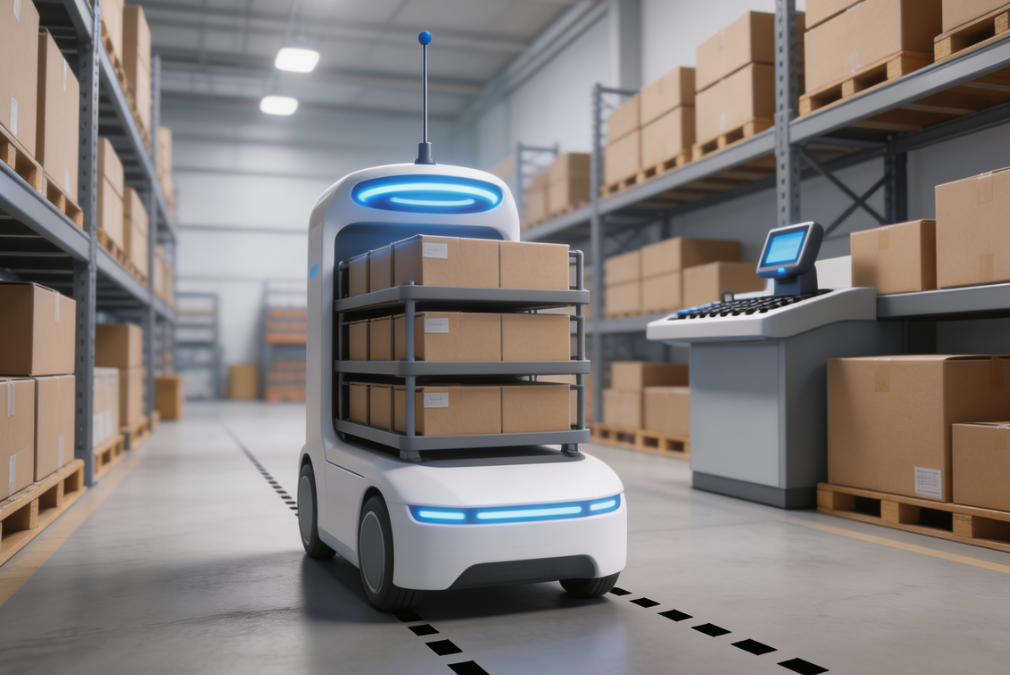
Large‑scale adoption of traditional industrial robots was underpinned by standardized production‑line design, mature system‑integrator ecosystems and comprehensive operation‑maintenance services. To achieve mass‑market commercialization, humanoid robots require not just better algorithms and cheaper hardware but a full set of ecosystem infrastructure covering scenario definition, standard‑setting and operational support — outcomes that demand long‑term collaborative investment across the whole industry.
VI. Differentiated Breakthrough Paths for the World’s Three Major Industrial Clusters
Leveraging respective industrial strengths, three distinct commercial‑exploration pathways have emerged globally. These three clusters differ in technical strengths, prioritized scenarios, commercialization strategies and deployment progress.
The Europe‑US pathway focuses on general‑purpose industrial and high‑end research‑oriented scenarios, with technological sophistication as core competitiveness. Tesla’s Optimus targets intralogistics and assembly within automotive factories; Figure AI partners with BMW to explore production‑line applications; Boston Dynamics continues to deepen its work in industrial inspection and hazardous‑task scenarios. Its strengths include underlying algorithms and engineering capabilities; weaknesses are steep costs and relatively slow deployment cadence.
The Japan‑South‑Korea pathway emphasizes precision service, elderly‑care and household use‑cases, centering on fine‑dexterity operation. Honda and Toyota boast deep humanoid‑robot expertise, focusing on care‑assistance and reception‑service applications; Samsung and LG in South Korea concentrate on household service and daily‑life support. Strengths lie in scenario understanding and precision manufacturing; weaknesses include relatively conservative iteration of general‑purpose intelligence.
The Chinese pathway prioritizes mass‑driven cost reduction and cost‑effective deployment, targeting large‑scale breakthroughs. Enterprises such as Unitree, Agibot and UBTECH leverage China’s sophisticated supply‑chain ecosystem to rapidly cut hardware costs while running pilot deployments for industrial handling, inspection and demonstration‑oriented use‑cases. Its strengths are supply‑chain efficiency and cost control; gaps persist in foundational algorithms and high‑end components.
For all their diverging approaches, the three clusters face the same fundamental challenge: mass‑production capacity does not equal commercialization capacity. Leading firms have publicly announced mass‑production plans, yet actual delivery volumes and revenue contributions remain minimal. Policy and capital keep pouring in, but they cannot fill the void of genuine market demand.
Most current humanoid‑robot use‑cases are “functional yet non‑essential”. Mature AGVs and robotic arms already handle industrial‑material‑handling tasks; lower‑cost dedicated robots cover many service‑sector needs; household‑use applications have not even met basic reliability benchmarks. The absence of irreplaceable, demand‑driven paying scenarios represents the shared core challenge for the global industry. Capital infusion can sustain R&D, yet it cannot indefinitely support business models lacking viable commercial loops.
VII. Rational Conclusions: Moving Beyond Technical Spectacle and Returning to Commercial Fundamentals
Humanoid robots have moved past laboratory validation but have not yet crossed the commercialization chasm. This calls for sober industry assessment: neither blind optimism nor excessive pessimism is warranted.
In the short term, the industry should abandon fantasies of universal‑purpose deployment and instead focus on niche high‑demand scenarios such as industrial material handling, precision assistance and hazardous operations. Limited‑scale real‑world deployments will generate real‑world data and refine technical loops. Sustained iteration within practical environments is the only way to narrow performance gaps between lab and market.
In the medium term, scenario‑driven iteration will drive cost reductions, while industry standards and operation‑maintenance ecosystems are gradually built. Large‑scale commercialization gains real economic foundations only once unit costs and return‑on‑investment cycles hit thresholds acceptable to industrial clients.
In the long run, global industrial collaboration must improve ecosystem completeness to realize mutual reinforcement between technology, real‑world scenarios and supporting ecosystems. The ultimate competition for humanoid robots is not about superior technical specifications, but about who can first establish the commercial loop: *deployment → data → iteration → profitability*.
Technical iteration can be accelerated in laboratories, yet commercial deployment can only mature through real‑world market experience. Technological advancement is a core dividend for industry development; market lag is an inevitable maturing process.
Humanoid robotics constitutes a long‑cycle industry. Short‑term competition hinges on pragmatic deployment; long‑term competition hinges on ecosystem moats. For industry participants, the true competitive focus is shifting from technical parameters toward delivering viable commercial loops. Whichever player first builds a sustainable *deployment‑data‑iteration‑profitability* cycle in real‑world settings will seize the initiative in the next phase — and that will mark the genuine inflection point for the industry.
END
Disclaimer
All data in this article are quoted from publicly available sources, including research reports published by Omdia, Goldman Sachs, IDC, TrendForce and other institutions. Data discrepancies stemming from differing statistical standards across organizations are normal.
All texts, images, research papers, market interpretations, industry analyses, compliance guides, business briefings and related content published on this official website serve solely for general industry‑knowledge outreach and macro‑market research reference, intended for knowledge‑sharing and industry‑exchange purposes only. They shall **not** be construed as investment advice, wealth‑management recommendations, trading guidance, legal‑compliance opinions, tax‑planning solutions or investment‑and‑financing decision‑making bases for any individuals, enterprises or institutions.
ARBORFIRE CAPITAL conducts business in strict compliance with SFC (Hong Kong), SEC (United States) and relevant domestic‑and‑overseas regulatory rules. Website content is compiled and analyzed based on public, compliant market policies and industry materials. No price‑trend forecasts, return guarantees, risk underwriting or investment promotions are provided for any individual stock, single fund or specific project. All historical market data and industry‑trend analyses constitute objective retrospectives and do not represent future market performance.
Cross‑border capital operations, overseas listings, asset allocation, offshore structuring and family‑wealth‑management services carry market risks, compliance risks and policy‑change risks. All users shall make independent and prudent decisions in light of their personal asset profiles and risk‑bearing tolerance, and consult licensed legal, tax or financial professionals when necessary. The Company assumes no legal liability for any user decisions or resulting outcomes based on content herein.
No entity may reproduce, alter or commercially use content from this official website without formal written authorization from ARBORFIRE CAPITAL.


 热搜榜
热搜榜

